Sanjay Gupta's Early Life and Childhood
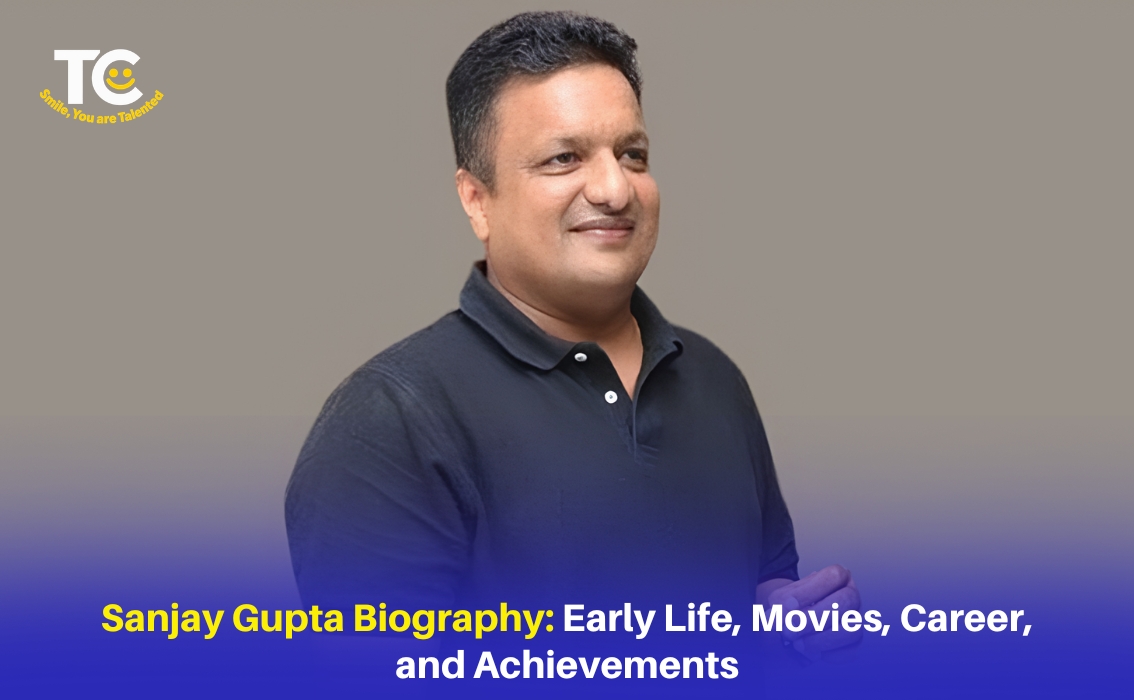
Sanjay Gupta was born and raised in Mumbai, Maharashtra. His childhood was shaped by difficult family circumstances, particularly the separation of his parents when he was still an infant.
In an interview with The Times of India, Gupta recalled that his parents separated when he was just two months old. He grew up with his mother, who played an important role in his upbringing.
Despite these challenges, Gupta developed an interest in films at an early age. While other children were considering conventional career paths, he found himself drawn to the world of cinema.
He was fascinated not only by the actors appearing on screen but also by the process of filmmaking itself. The way scenes were constructed, stories unfolded, and characters came to life captured his imagination.
His interest became increasingly serious during his teenage years.
Although published accounts differ regarding his formal educational background, Gupta was associated with schools and colleges in Mumbai, including Palm Beach School and Sydenham College. However, his practical experience in the film industry ultimately became more significant than his academic education.
How Sanjay Gupta Entered Bollywood
Breaking into the Indian film industry was not an easy task, particularly for someone without an established filmmaking background.
Gupta's first major opportunity reportedly came through an unexpected meeting with filmmaker Pankaj Parashar.
In an interview with Hindustan Times, Gupta recalled approaching Parashar after spotting him speaking with actor Mazhar Khan. Rather than waiting for a formal opportunity, he directly expressed his desire to work in films.
Parashar invited him to join as an assistant.
That encounter marked an important turning point in Gupta's life.
He began gaining practical experience through projects such as the television detective series Karamchand and the film Jalwa. His responsibilities introduced him to different aspects of filmmaking, including production, editing, and sound design.
Working behind the scenes helped Gupta understand how films were assembled and how technical decisions could influence the audience's experience.
During these early years, he also developed professional relationships that would later support his transition into directing.
Among the most significant was his association with actor Sanjay Dutt, whom he met while working around the production of Thanedaar in 1990.
Their professional relationship would play an important role in Gupta's early directorial career.
Sanjay Gupta's Directorial Debut With Aatish
Sanjay Gupta made his debut as a film director with Aatish: Feel the Fire in 1994.
The action crime drama featured Sanjay Dutt, Aditya Pancholi, Raveena Tandon, and other established Bollywood performers.
The film explored themes of friendship, loyalty, crime, and the consequences of difficult choices.
Although Gupta was still a relatively new director, Aatish introduced several elements that would become recurring features of his later work.
His storytelling frequently revolved around morally complicated characters rather than straightforward heroes and villains. Violence was often connected to personal relationships, while betrayal and revenge drove the narrative forward.
Following his debut, Gupta continued directing films such as Ram Shastra in 1995, Hameshaa in 1997, Jung in 2000, and Khauff in 2000.
These projects allowed him to develop his filmmaking approach while establishing himself within the Hindi film industry.
However, his most recognisable breakthrough was still to come.
Kaante: The Film That Changed His Career
In 2002, Sanjay Gupta directed Kaante, a crime thriller that became one of the defining films of his career.
The movie brought together an ensemble cast that included Amitabh Bachchan, Sanjay Dutt, Suniel Shetty, Mahesh Manjrekar, Lucky Ali, and Kumar Gaurav.
Its story followed a group of men who plan a major robbery, only to find their relationships increasingly strained by suspicion and betrayal.
What made Kaante distinctive was its presentation.
The film featured stylised action sequences, striking cinematography, energetic editing, and a soundtrack that complemented its tense atmosphere.
Rather than following the conventions of a typical Bollywood action film, Gupta drew inspiration from international crime cinema.
The influence of Hollywood thrillers was particularly visible in its storytelling and visual style.
Although the film attracted discussion about its similarities to earlier international productions, it also helped establish Gupta's reputation as a director interested in experimenting with the presentation of Hindi action cinema.
For many viewers, Kaante remains one of his most memorable works.
Sanjay Gupta's Major Movies and Career Highlights
After Kaante, Gupta continued exploring crime thrillers, action dramas, and stories involving characters facing extraordinary circumstances.
Musafir (2004)
Musafir starred Anil Kapoor, Sanjay Dutt, and Sameera Reddy.
The film followed a man whose involvement with dangerous criminals leads him into a complicated world of deception and violence.
Gupta used fast-paced editing, dramatic visuals, and a prominent soundtrack to create a distinctive atmosphere.
Although the film received mixed responses, it strengthened his association with stylish action thrillers.
Zinda (2006)
Released in 2006, Zinda featured Sanjay Dutt, John Abraham, and Lara Dutta.
The psychological action thriller followed a man who is mysteriously imprisoned for several years before being released without explanation.
As he searches for the truth behind his captivity, the story develops into a disturbing exploration of revenge and personal suffering.
The film was widely recognised for its similarities to the South Korean film Oldboy, reflecting Gupta's continuing interest in adapting international thriller concepts for Indian audiences.
Shootout at Lokhandwala (2007)
Shootout at Lokhandwala was another important project associated with Gupta, although it was directed by Apoorva Lakhia.
Gupta contributed as a producer and co-writer.
The film was inspired by a real police encounter in Mumbai and featured actors including Amitabh Bachchan, Sanjay Dutt, Vivek Oberoi, and Suniel Shetty.
Its depiction of organised crime and police operations reinforced the popularity of gangster-themed films in mainstream Hindi cinema.
Shootout at Wadala (2013)
Gupta returned to directing with Shootout at Wadala, a crime drama starring John Abraham, Anil Kapoor, Kangana Ranaut, and Manoj Bajpayee.
The story explored the rise of gangster Manya Surve and his conflict with law enforcement in Mumbai.
The film drew inspiration from real events and focused on the violence and power struggles associated with the city's criminal underworld.
For Gupta, it represented a return to a genre that had played a major role in his career.
Jazbaa (2015)
In 2015, Gupta directed Jazbaa, starring Aishwarya Rai Bachchan and Irrfan Khan.
The film followed a successful lawyer whose daughter is kidnapped, forcing her into a desperate legal and personal struggle.
Unlike some of his earlier films, Jazbaa placed greater emphasis on a mother's emotional experience while retaining the suspense and dramatic tension associated with Gupta's filmmaking.
The project also marked Aishwarya Rai Bachchan's return to the big screen after a period away from acting.
Kaabil (2017)
Kaabil, released in 2017, featured Hrithik Roshan and Yami Gautam in the lead roles.
The romantic revenge thriller followed a visually impaired couple whose lives are devastated by a violent crime.
As the story progresses, the central character seeks justice through increasingly dangerous methods.
The film combined emotional drama with action and suspense, allowing Gupta to explore themes of love, grief, and revenge.
Kaabil remains among the most widely recognised films of his later career.
Mumbai Saga (2021)
With Mumbai Saga, Gupta returned to the world of organised crime.
Starring John Abraham and Emraan Hashmi, the film explored Mumbai's transformation during a period of rapid economic and social change.
Its narrative followed conflicts involving gangsters, political influence, and law enforcement.
The film reflected Gupta's continuing fascination with Mumbai as a setting for stories about ambition, power, and survival.
The Miranda Brothers (2024)
In 2024, Gupta directed The Miranda Brothers, a sports drama focusing on family relationships and personal challenges.
The project demonstrated his willingness to move beyond the crime and gangster genres most closely associated with his career.
Although action thrillers remained central to his filmography, his later work showed an interest in exploring different kinds of human conflict.
Sanjay Gupta's Filmmaking Style
Sanjay Gupta developed a recognisable cinematic identity over the course of his career.
His films often featured characters who lived in morally uncertain environments, where relationships were shaped by ambition, fear, and conflicting loyalties.
Mumbai frequently served as an important backdrop.
Its busy streets, criminal networks, political relationships, and changing social landscape provided the setting for several of his stories.
Gupta was also known for paying close attention to the technical aspects of filmmaking.
Editing, background music, cinematography, and action choreography played important roles in creating the atmosphere of his films.
He frequently experimented with dramatic lighting, stylised camera movements, and visual techniques influenced by international cinema.
His work also attracted criticism, particularly regarding adaptations and similarities to existing foreign films.
However, these influences formed part of his filmmaking identity, and Gupta openly discussed his admiration for international thrillers during interviews.
Rather than limiting himself to conventional Bollywood storytelling, he repeatedly experimented with the structure and presentation of crime dramas.
Sanjay Gupta's Personal Life and Family
Away from film sets, Sanjay Gupta experienced both personal difficulties and important moments of reconciliation.
He was married to Anu Lekhi.
Their relationship went through a difficult period, eventually resulting in divorce. However, the couple later reunited and remarried in 2009.
Gupta spoke openly in interviews about their separation and the efforts involved in rebuilding their relationship.
The couple had two children.
His friendship with Sanjay Dutt was another significant aspect of his personal and professional life.
The two worked together on several films and shared a close association during different periods of their careers.
However, their friendship also experienced disagreements and a lengthy estrangement.
Gupta later acknowledged the emotional impact of their separation, describing how much the relationship had meant to him.
These experiences provided a more personal perspective on a filmmaker whose public image was largely associated with action-packed cinema.
Sanjay Gupta's Achievements and Contributions to Bollywood
Throughout his career, Gupta contributed to Hindi cinema as a director, producer, and writer.
One of his important achievements was establishing himself as a filmmaker associated with visually distinctive action thrillers.
His 2002 film Kaante helped strengthen that reputation and earned him recognition, including a Filmfare Best Director nomination.
He also contributed to commercially prominent projects such as Shootout at Lokhandwala and directed major films including Shootout at Wadala, Jazbaa, and Kaabil.
Another notable aspect of his career was his collaboration with established Bollywood performers.
He worked with actors such as Amitabh Bachchan, Sanjay Dutt, Anil Kapoor, John Abraham, Hrithik Roshan, Aishwarya Rai Bachchan, Irrfan Khan, and Emraan Hashmi.
His interest in crime narratives also contributed to the visibility of gangster stories within mainstream Hindi cinema.
While his films received varying critical responses, several developed lasting recognition among audiences interested in action and thriller cinema.
His career reflected both the opportunities and challenges of working within a rapidly changing Indian film industry.
Sanjay Gupta's Death and Legacy
Sanjay Gupta died on 30 October 2026 following a reported fall at his residence in Mumbai.
According to reports published by The Indian Express and The Times of India, he suffered a serious head injury at his home in Versova.
Police registered an accidental death report and began investigating the circumstances surrounding the incident.
Reports published after his death contained differences regarding his exact age, reflecting inconsistencies in publicly available biographical information.
His passing prompted tributes from colleagues and members of the Hindi film industry who remembered his work, professional relationships, and contributions to filmmaking.
Gupta left behind a body of work spanning more than three decades.
His films reflected changing trends in Hindi cinema while maintaining a consistent interest in stories involving power, violence, loyalty, and personal conflict.
From the early ambition that brought him into the film industry to the crime thrillers that shaped his reputation, his career illustrated a lifelong commitment to filmmaking.
Conclusion
Sanjay Gupta's journey through Bollywood was shaped by determination, experimentation, and a fascination with storytelling.
Beginning his career as an assistant, he gradually established himself as a director capable of working with major actors and producing ambitious action thrillers.
Films such as Kaante, Musafir, Shootout at Wadala, and Kaabil remain important parts of his cinematic legacy.
His career was not without criticism or setbacks. Nevertheless, his willingness to experiment with visual storytelling and explore morally complicated characters gave his films a recognisable identity.
For someone who developed a passion for cinema during childhood, the opportunity to spend more than three decades making films represented a remarkable personal achievement.
His work remains part of the broader history of Hindi action and crime cinema.
Frequently Asked Questions
Who was Sanjay Gupta?
Sanjay Gupta was an Indian film director, producer, and screenwriter known for directing Bollywood films such as Kaante, Musafir, Shootout at Wadala, Jazbaa, and Kaabil.
What was Sanjay Gupta's first movie?
Sanjay Gupta made his directorial debut with Aatish: Feel the Fire in 1994. The film starred Sanjay Dutt, Aditya Pancholi, and Raveena Tandon.
Which are Sanjay Gupta's most famous movies?
Some of his best-known movies include Kaante (2002), Musafir (2004), Zinda (2006), Shootout at Wadala (2013), Jazbaa (2015), Kaabil (2017), and Mumbai Saga (2021).
Who was Sanjay Gupta's wife?
Sanjay Gupta was married to Anu Lekhi. The couple divorced before reconciling and remarrying in 2009.
What was Sanjay Gupta known for in Bollywood?
He was primarily known for action thrillers, crime dramas, stylised filmmaking, and stories involving gangsters, revenge, and complex personal relationships.
When did Sanjay Gupta die?
Sanjay Gupta reportedly died on 30 October 2026 after suffering a head injury following a fall at his Mumbai residence.