 Talented
What is influencer marketing?
Influencer marketing is a partnership between a brand and a content creator who has built a loyal audience online.
Unlike traditional advertising, it relies on trust rather than interruption.
People choose to follow creators because they enjoy their content, value their opinions or relate to their experiences. When those creators recommend a product or service, the message often feels more personal than a conventional advertisement.
That doesn't mean every recommendation leads to sales. Successful influencer marketing depends on choosing someone whose audience genuinely matches your target customers.
Why influencer marketing is growing in Pakistan
Pakistan's digital landscape has changed rapidly over the past few years.
Millions of people now spend hours each day on platforms such as Instagram, TikTok, Facebook and YouTube. Shopping habits have also evolved. Many consumers discover new products through social media before they ever visit a website or store.
This shift has created new opportunities for businesses of every size.
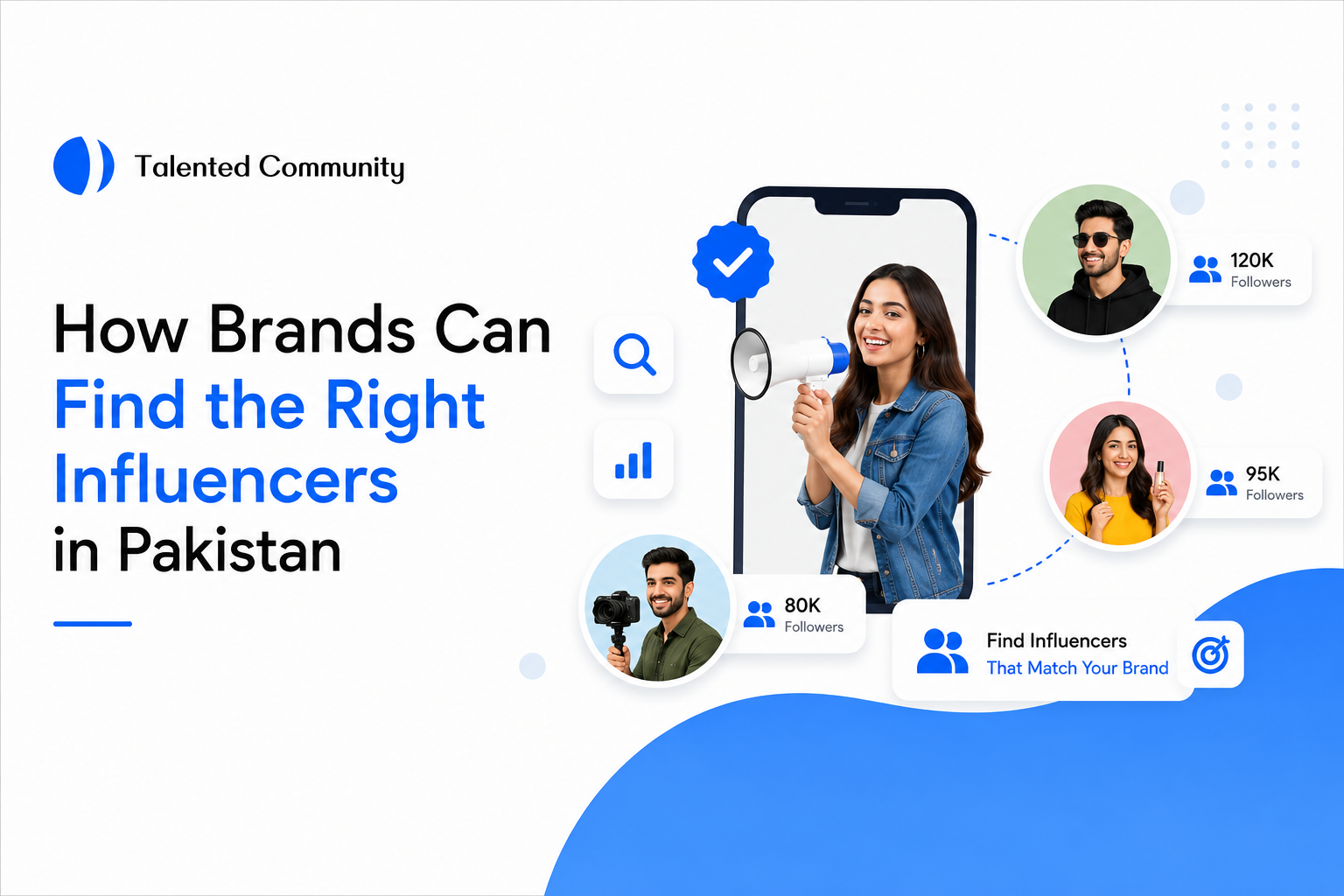
Large brands continue to work with celebrities, but smaller companies no longer need enormous marketing budgets. A local creator with a highly engaged audience can often deliver better results than a national celebrity whose followers have little interest in the product.
For many businesses, relevance matters more than reach.
Different types of influencers
Not every influencer has millions of followers.
In fact, smaller creators often build stronger relationships with their audiences.
Nano influencers
Nano influencers usually have between 1,000 and 10,000 followers.
Their communities are small, but engagement is often high. Followers tend to know them personally or trust their recommendations.
These creators are well suited to local businesses, restaurants and niche brands.
Micro influencers
Micro influencers generally have between 10,000 and 100,000 followers.
They specialise in areas such as fashion, beauty, fitness, food, technology or travel.
Many brands see them as the ideal balance between affordability and reach.
Macro influencers
Macro influencers have hundreds of thousands of followers.
Their campaigns can generate significant visibility, making them suitable for established brands launching products or expanding into new markets.
Celebrity influencers
Celebrities remain influential, particularly for nationwide campaigns.
However, they also come with higher costs and may not always deliver the highest engagement.
Choosing the right influencer
The biggest audience isn't always the best audience.
Before reaching out to a creator, ask a few simple questions.
Does their content match your brand?
Are their followers genuinely active?
Do they regularly engage with comments?
Have they promoted similar products successfully?
An influencer who consistently creates authentic content is often more valuable than someone with inflated follower numbers.
Beyond follower counts
It's easy to focus on how many followers someone has.
That number tells only part of the story.
A creator with 20,000 loyal followers may generate more enquiries than one with 500,000 inactive accounts.
Brands should pay close attention to engagement.
Comments, shares, saves and meaningful conversations usually reveal more about audience trust than follower counts alone.
Setting clear campaign goals
Every campaign should begin with a clear objective.
Some businesses want to increase brand awareness.
Others want website traffic, app downloads or direct sales.
Without a defined goal, it becomes difficult to measure success.
The content, platform and influencer should all support the same outcome.
Popular platforms in Pakistan
Different platforms attract different audiences.
Instagram remains one of the strongest choices for fashion, beauty, lifestyle and food brands.
TikTok has become a powerful platform for short-form entertainment and product discovery. Viral videos can introduce a brand to thousands of potential customers within hours.
YouTube works particularly well for product reviews, tutorials and long-form storytelling.
Facebook still plays an important role for local businesses, especially when targeting older audiences.
Choosing the right platform is often just as important as choosing the right creator.
Common mistakes brands make
Many campaigns fail for predictable reasons.
Some businesses select influencers purely because they have large followings.
Others provide almost no creative direction.
There are also brands that expect immediate sales from a single sponsored post.
Influencer marketing usually works best as part of a wider marketing strategy. Consistency builds familiarity, and familiarity often leads to trust.
Measuring success
The campaign doesn't end once the content is published.
Brands should review performance carefully.
Useful metrics include:
- Reach and impressions
- Engagement rate
- Website traffic
- Click-through rate
- Leads generated
- Sales and conversions
- Return on investment (ROI)
Looking at these figures helps businesses understand what worked and where future campaigns can improve.
How online talent marketplaces are changing the process
Finding the right influencer has traditionally been time-consuming.
Brands often searched social media manually, contacted creators individually and negotiated campaigns through direct messages.
Online talent marketplaces have simplified that process.
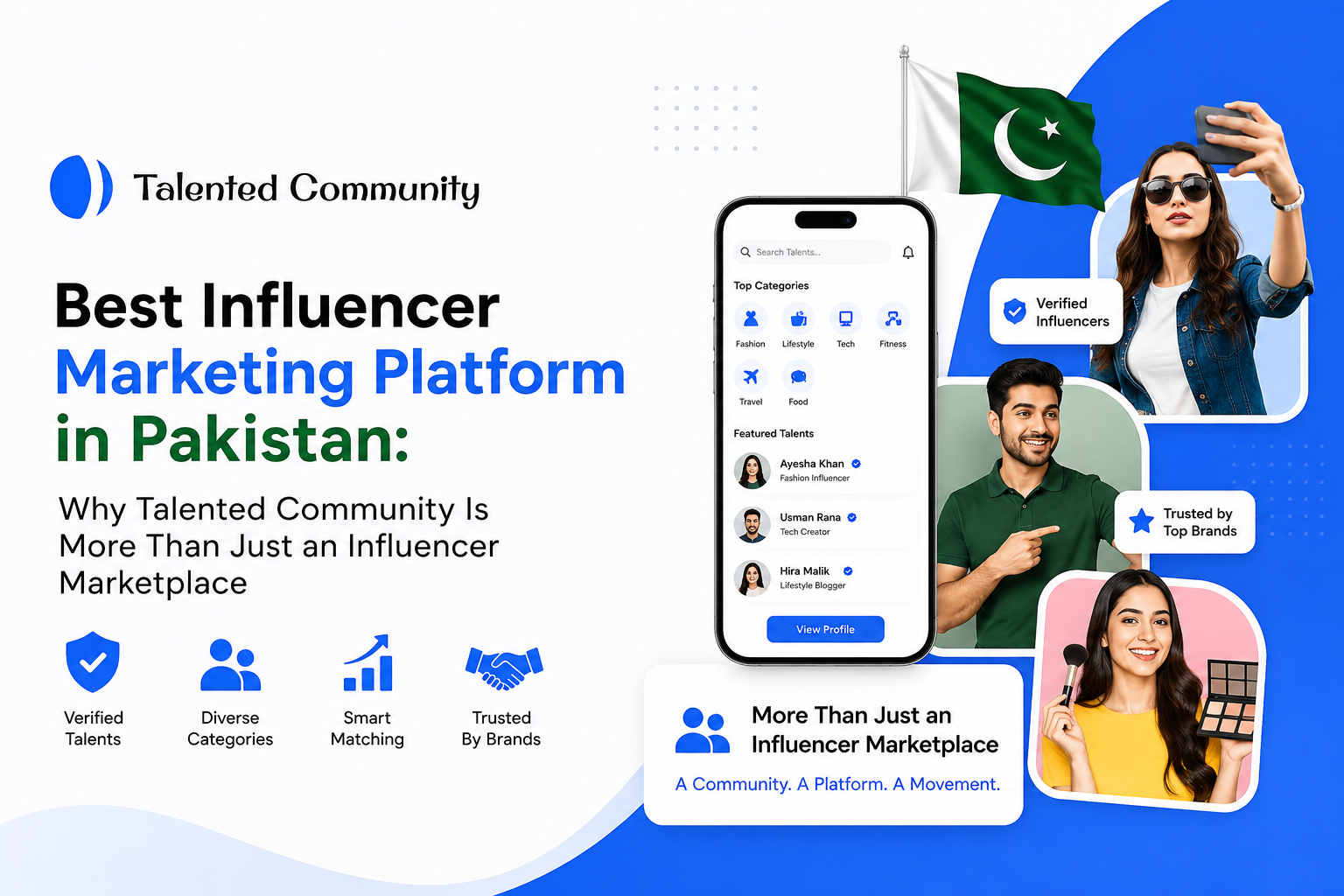
Instead of spending days searching, businesses can browse verified creators, compare profiles, review audience insights and communicate from a single platform.
This makes influencer discovery faster, more transparent and easier to manage, especially for businesses running multiple campaigns.
The future of influencer marketing in Pakistan
The industry is still evolving.
As more Pakistanis spend time online, creators will continue to shape purchasing decisions across fashion, technology, food, education, travel and countless other industries.
At the same time, audiences are becoming more selective.
People can usually recognise content that feels forced or overly promotional. They are more likely to respond to creators who remain honest, transparent and consistent.
That means the future of influencer marketing is unlikely to belong to the loudest voices.
It will belong to the most trusted ones.
Final thoughts
Influencer marketing is no longer reserved for multinational brands or celebrity endorsements.
It has become an accessible marketing channel for startups, small businesses and established companies alike.
Success, however, depends on more than finding someone with a large following. It requires choosing creators whose audiences genuinely align with your brand, setting clear objectives and measuring results beyond likes and views.
When those elements come together, influencer marketing becomes more than a social media trend. It becomes a long-term strategy for building trust, reaching new customers and growing a business in Pakistan's increasingly digital economy.