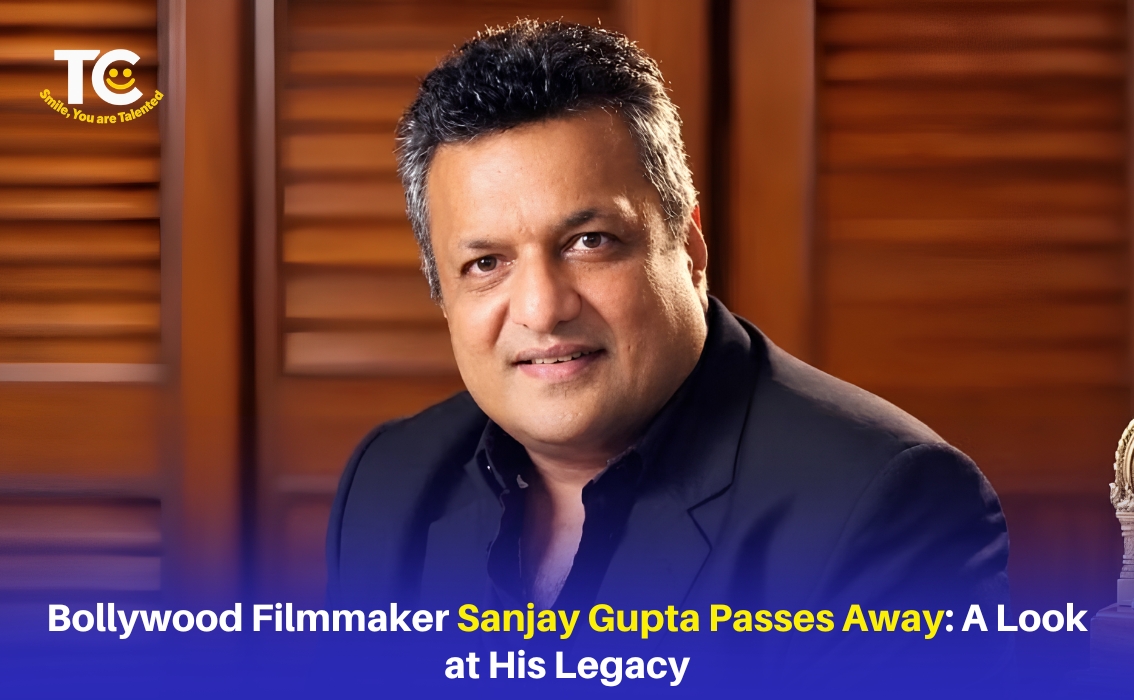
A filmmaking journey that began with Aatish
Sanjay Gupta entered Hindi cinema as a director in 1994 with Aatish: Feel the Fire, starring Sanjay Dutt and Aditya Pancholi. The film established his interest in crime, friendship and the complicated relationships that develop between men living on the wrong side of the law.
He followed it with Ram Shastra in 1995 and Hameshaa in 1997, gradually building a reputation for action-oriented storytelling.
These early projects arrived at a time when Bollywood was still dominated by romantic dramas and traditional action films. Gupta's work drew heavily on the visual language of international crime cinema, introducing darker settings, elaborate camera movements and characters whose motivations were rarely straightforward.
His willingness to experiment became a defining feature of his career.
Kaante: The film that defined his style
For many viewers, Kaante remains the film most closely associated with Sanjay Gupta.
Released in 2002, the heist thriller brought together an ensemble cast that included Amitabh Bachchan, Sanjay Dutt, Suniel Shetty, Mahesh Manjrekar, Kumar Gaurav and Lucky Ali.
The story followed six men whose plan to rob a bank takes a dangerous turn when suspicion begins to destroy their trust in one another.
Set largely in Los Angeles, Kaante was notable for its stylised cinematography, music, costumes and unconventional approach to a Hindi-language crime thriller.
The film drew comparisons with Hollywood productions, particularly Quentin Tarantino's Reservoir Dogs. Its international influences were unmistakable, yet Gupta gave the material a distinctly Bollywood personality through its performances, dialogue and soundtrack.
Over time, Kaante developed a cult following, becoming one of the most enduring examples of his approach to filmmaking.
Exploring the darker side of Mumbai
Following Kaante, Gupta continued experimenting with crime stories and morally complicated characters.
Musafir (2004), starring Anil Kapoor and Sanjay Dutt, explored betrayal and desperation through a fast-moving thriller. Two years later, Zinda took a more psychological approach, following a man imprisoned for years without knowing who was responsible.
His fascination with the criminal underworld also shaped Shootout at Wadala (2013), featuring John Abraham, Anil Kapoor and Manoj Bajpayee.
Inspired by the story of gangster Manya Surve, the film portrayed Mumbai's violent underworld and its encounters with law enforcement.
Gupta was also involved in Shootout at Lokhandwala (2007) as a producer and writer, while Apoorva Lakhia directed the film.
These projects demonstrated his continued interest in stories involving power, revenge and the fragile boundaries between crime and justice.
Beyond gangster films
Although crime thrillers became Gupta's speciality, his later career showed an interest in exploring other forms of storytelling.
In 2015, he directed Jazbaa, marking Aishwarya Rai Bachchan's return to cinema after a break. The thriller followed a lawyer confronting an increasingly dangerous situation involving her daughter.
Two years later came Kaabil, starring Hrithik Roshan and Yami Gautam. The revenge drama centred on a visually impaired couple whose lives are devastated by violence.
While retaining Gupta's preference for suspense and confrontation, Kaabil placed greater emphasis on personal loss and emotional consequences.
He returned to the crime genre with Mumbai Saga in 2021, featuring John Abraham and Emraan Hashmi. Set against Mumbai's changing criminal and commercial landscape, it explored the relationship between gangsters, police officers and political influence.
His later directorial work also included The Miranda Brothers, released in 2024.
An industry remembers a friend and mentor
The response to Gupta's death extended beyond appreciation for his films.
Filmmaker Ashoke Pandit confirmed the news publicly on October 31, describing Gupta as an energetic storyteller and passionate filmmaker.
Hansal Mehta, who had worked with Gupta on several projects, remembered him as a close friend who supported him through difficult periods in his career. Their professional relationship included collaborations on Dus Kahaniyaan and Woodstock Villa.
Director Milap Zaveri also paid an emotional tribute, recalling Gupta's guidance and the opportunities he provided during his early years in the film industry.
Actors including Kajol, Raveena Tandon, Dia Mirza and Manisha Koirala were among those who expressed their condolences.
Gupta's funeral took place at the Versova crematorium in Mumbai on October 31, attended by family members and colleagues, including Abhishek Bachchan and Manoj Bajpayee.
What Sanjay Gupta leaves behind
Sanjay Gupta's films were not always universally praised. His reliance on international cinematic influences and his preference for heightened action occasionally divided critics.
But his contribution to Hindi cinema cannot be understood through critical reception alone.
He was part of a generation of filmmakers willing to challenge familiar conventions of mainstream Bollywood, particularly in the way crime stories looked, sounded and unfolded on screen.
His characters were often flawed. His worlds were violent and unpredictable. Yet beneath the elaborate action sequences, his films repeatedly returned to human relationships shaped by loyalty, ambition, betrayal and revenge.
For audiences who grew up watching Kaante, Musafir or Shootout at Wadala, these films remain reminders of a particular era of Bollywood filmmaking.
Gupta's career also illustrates how a director's influence can extend beyond the films carrying their name. Through his production work and collaborations, he helped bring other filmmakers and performers into projects that contributed to the evolution of Hindi action cinema.
More than three decades after Aatish introduced him to audiences, his work remains part of Bollywood's cinematic history.
And perhaps that is how Sanjay Gupta will be remembered most clearly: through the films, characters and stories that continue to find viewers long after their creator is gone.